

We’re far from fluid in attack.
Last year’s runaway Premier League Player of the Season, Mo Salah — a human being I hold in such high regard that I named my labrador after him — has lost his mojo. Five goals in all comps this season.
Prized summer signing Alexander Isak can’t get going for reasons ranging from service to fitness. When left winger Cody Gakpo isn’t cutting in from the left and blazing the ball over the bar with his right, he’s missing sitters at pivotal moments. Hugo Ekitike hasn’t offered the same return since his absurd sending off versus Southampton. Our miserable run in form started the next game, away at Palace.
Meanwhile, Luis Diaz, a dependable member of last season’s starting setup, is loving life at Bayern Munich. And of course, there’s a Diogo Jota-shaped hole in the team that’s felt most of all.
Our attack is undoubtedly a problem.
But it’s not the problem.
Say it with me. Defense wins championships.
Cringe, I know. It’s a refrain so infused with dad energy that I feel wrong sitting at a desk instead of in a La-Z-Boy as I type this. But watching us pick the ball out of our own net 35 times in 22 games has unearthed the wisdom of those three words for me.
You read that correctly, by the way: 35 times in 22 games. That’s 1.59 goals conceded per game.
After 22 games last season, we’d conceded just 15 times. 0.68 goals per game. After all 56 games last season, we’d conceded 55 — just shy of a goal per game. And nine of those goals came in the four games after we clinched the league.
Our defense is the problem. Now that we’ve established that, the obvious question is: what changed between last season and this one?
1. A time of transition
Trent Alexander-Arnold, Jarell Quansah, and Kostas Tsimkas out. Jeremie Frimpong, Milos Kerkez, and Giovanni Leoni in.
At first glance, this bit of summer business looked like an upgrade. Trent’s obvious quality going forward wasn’t enough to deflect attention from his defensive shortcomings last season. Andy Robertson, who many Liverpool fans consider the greatest left back in the history of the club, had begun to show signs of decline. Arne Slot made it clear Quansah was a squad option.
Replacing that trio with a pair of young, high-flying wingbacks and one of the premier teenage center backs in world football was a welcome trade for the vast majority of Liverpool supporters.
Injuries and new on-field relationships have made the transition tricky, though. Frimpong’s stellar injury record took a hit in his first league game for the club — his hamstring issue has kept him off the field almost every game since. Our other natural right back, Conor Bradley, seemed to have finally hit his stride before the international break, but he returned with a muscle issue. Leoni’s stellar debut in the Carabao Cup ended horrifically when he tore his ACL.
Kerkez, a popular scapegoat due to his inconsistent, sometimes reckless start to his Liverpool career, hasn’t benefitted from a one-dimensional left-sided partner in Gakpo, or a tactical setup that’s limited his ability to do what he does best: play vertically, using his pace to cover, recover, and swing in crosses. He’s shared time with Robertson instead of grabbing the starting spot with two hands.
The lack of a settled back four has made it tough to find rhythm, especially with the likes of Dom Szoboszlai and Curtis Jones often being deployed at right back instead of in the midfield.
2. Instability without the ball
Knowing how the guy next to you, the guy in front of you, and the guy behind you expect you to behave with the ball and, perhaps even more crucially, without the ball is everything on a football pitch. Establishing this understanding requires game time together and clarity from the coaching staff. I’d argue our players haven't had enough of either.
Several of our first-team regulars are mere months into their tenures with the club, so it’s fair to expect some growing pains. But we’re so easy to play through, it seems unlikely that our off-the-ball play is solely down to that. Our patience and solidity out of possession against Real Madrid was spot on. We kept it compact and then pounced, often in midfield or our own defensive third.

Unfortunately, that performance seems to be the exception rather than the rule this season. Our attackers and midfielders are pulled out of position far too easily. We're hunting the ball alone rather than in packs far too often. When we press, we half-press. We need to commit to cohesive pressure or commit to sitting deeper. We can't keep doing a little of both.
Whatever Slot’s instructions are for managing the game without the ball, this team hasn’t been able to carry them out consistently.
3. An inexplicable four months from Ibou Konate
It’s never as simple as blaming one guy. I didn’t just finish a section on the importance of team defense and relationships only to change my mind a paragraph later.
The fact remains, Slot is pretty starved for options at center back. We swung and missed on Marc Guehi this summer. Leoni is out for the season. Joe Gomez is not only perpetually plagued by injuries, but needed to deputize at right back at the moment.
That leaves Slot with the captain and Ibou. Unless he wants to risk Gomez, or try Gravenberch or Endo (not what I would do), he has to keep playing Konate.
Before Endrick’s cynical foul sidelined him just over a year ago, it’s not hyperbole to say the French international was one of the best center backs in the world on form. At his best, Ibou uses his physical gifts to win his individual battles, dominate the air, cover his right back, and even carry the ball between the lines.
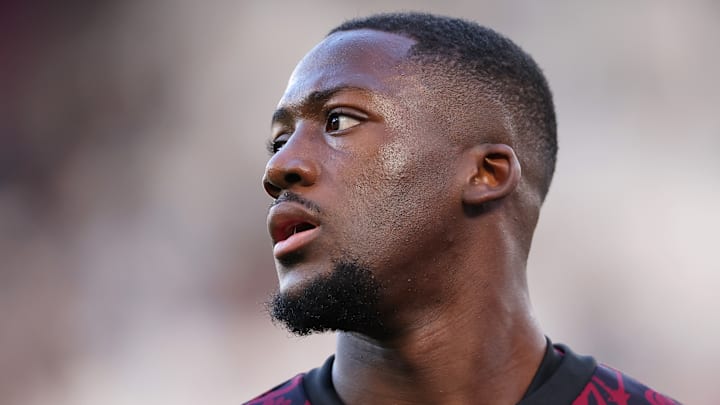
At his worst, he’s a six-foot-four error waiting to happen. The ball watching, over-commiting, misplaced passes, and tame physical play has killed us at crucial times this year. He’s not the only one playing well below his standard, but he’s been our least valuable player this campaign. He’s capable of picking it back up, and he’ll need to if we want to make any sort of run toward the top four or European Cup this season.
 Add us as a preferred source on Google