

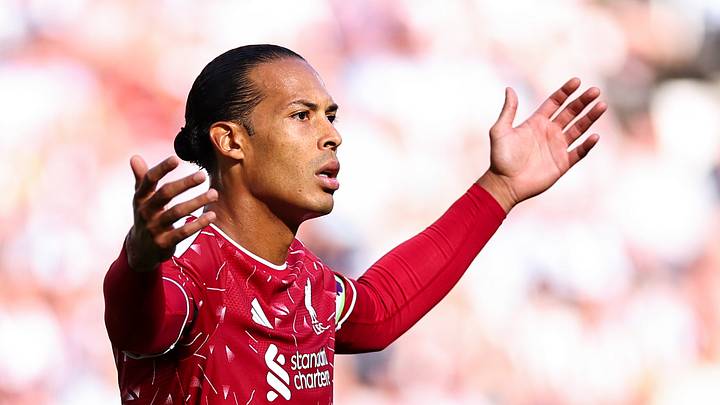
Liverpool captain Virgil Van Dijk has urged patience after Liverpool were held to a 2-2 draw by Newcastle United in Andoni Iraola’s first game in charge of the Reds, with the skipper admitting his side still need time to adapt to the new manager’s tactical demands.
Liverpool twice found themselves exposed on the counter-attack at St James’ Park, cut open easily and conceding avoidable goals in a performance which highlighted some early defensive uncertainty under the new regime.
For Van Dijk, the team’s ability to find a late equaliser in the shape of a Dominik Szoboszlai penalty in the 99th minute was not a get-out-of-jail card but a reminder of the work still required on the training ground.
When asked about how the Reds are adapting defensively to Iraola’s tactical instructions, the 35-year-old Dutchman stressed that the squad are still deep in the learning process of the differing roles they are expected to play under fresh management.
Speaking in his post match interview
“The way we are 1v1 a lot of the time, a little bit more direct, but also in possession [Iraola] has certain things we train on and want to implement, including set pieces,’ he explained.
“I think everyone will understand that if anyone new comes in it just takes a little bit of time.”
That emerging word was the overarching message from the Liverpool skipper: time.
The game reflected in a multitude of ways how the Reds are not only adapting to a new tactical system but also attempting to establish a new centre-back partnership, with the captain sharing minutes with both of his potential defensive partners against the Magpies.
Ronald Araujo played the final 20 minutes, whilst Jeremy Jacquet made his debut in the starting XI alongside Van Dijk and lasted 70 minutes. The skipper, who has been at the core of formidable title-winning partnerships with the likes of Joe Gomez and Joel Matip, insisted that defensive cohesion cannot be developed overnight.
“It takes games”, Virgil said. “It takes understanding of what each other likes to do, and to understand each other's game. If the ball is on one side, what does your partner do? Is he covering? Is he going in front?”
“I’m pretty confident, both [Araujo and Jacquet] are very good players. It’s down to all of us to make sure we are a tight unit.”
The skipper was particularly revealing when discussing why Liverpool continued to concede from similar counter-attacking situations.
“When we have the ball and the [opposing] team is dropping deep, with even the striker on the edge of his own box, we have to make sure that we are pushed up.
“I think, with the first goal, one of [the centre halves] could’ve been higher with Osula, at least stopping the counter-attack or making a small foul."
The Dutchman's emphasis on tactical fouls was significant, particularly given the amount of them utilised by the home side.
Whilst Newcastle were able to exploit large spaces once the Reds had lost possession, Liverpool found themselves time and time again halted in promising patterns of attacking play by fouls that allowed Newcastle to regain shape.
Ultimately, Van Dijk’s reaction suggested that Liverpool’s defensive struggles are being viewed as a consequence of transition rather than a long-term problem.
With a new manager, new tactical instructions and new centre-back combinations, cohesion will inevitably take time.
Liverpool’s next fixture against Nottingham Forest could therefore provide an early indication of whether that defensive understanding is beginning to develop, and whether Iraola’s Reds can look considerably more formidable at the back.
 Add us as a preferred source on Google