

Liverpool's summer offseason is officially underway, and with a break from match coverage and postgame analysis, I'll be sharing weekly in-depth thoughts on everything from club developments and transfer rumors to training-ground updates and preseason friendlies.
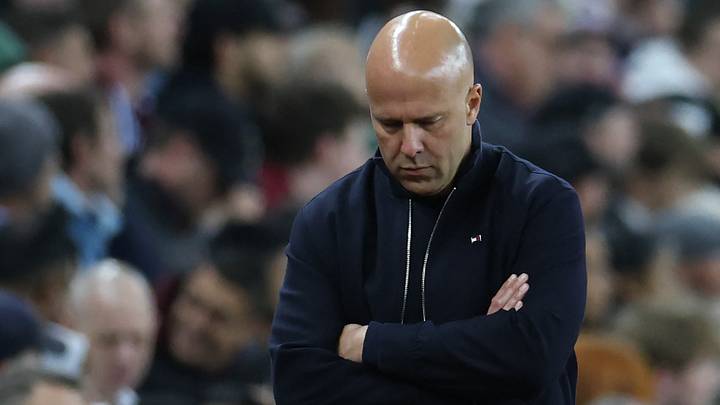
To kick off Monday Musings, we'll start with what may already be the biggest story of the summer: Liverpool's decision to sack Arne Slot.
The whispers surrounding the future of the Dutch manager—who guided Liverpool to a historic 20th league title in 2024/25—were confronted head-on Saturday morning when the club officially announced his departure.
Beginning the offseason with a seismic decision, Liverpool have sent a clear signal about the direction they want to take moving forward. But was it the right call?
As the dust begins to settle, let's examine some of the potential pros and cons of one of the club's most consequential managerial decisions in recent memory.
Pro: Easing the discontent of the fanbase and locker room
I may be in the minority of supporters who felt Arne Slot deserved another season—which we'll get into later—but even I couldn't ignore how tense the atmosphere around Anfield had become during the closing months of his tenure.
That frustration was evident in matches such as the disappointing draw against Chelsea, when sections of the crowd greeted Slot with audible boos.
As much as I hoped things could improve heading into next season, it became increasingly clear that a significant portion of the fanbase—and, perhaps most importantly, the supporters filling the stands each week—had lost faith in the Dutchman.
The skepticism wasn't limited to the terraces, either. While players such as Florian Wirtz and Dominik Szoboszlai publicly defended Slot during the run-in, Mohamed Salah's not-so-subtle Instagram post, in which he appeared to indirectly link Liverpool's declining standards to the manager, attracted widespread support from Reds online.
For a player as measured and reserved as Salah, the criticism felt particularly noteworthy. Combined with the visible frustration among supporters and the growing sense of unrest around the club, it hinted at the possibility that Slot had begun to lose parts of the dressing room as well.
Perhaps no image captured the mood surrounding the manager more vividly than a viral photograph that circulated shortly after both Salah and Andy Robertson confirmed their departures from the club. In it, a supporter held a sign reading: "THANKS FOR THE GREAT TIMES MO SALAH + ROBBO... YNWA... TAXI FOR SLOT."
Whether fair or not, it was a stark illustration of just how dramatically opinion had turned by the end.
If Liverpool's hierarchy felt that the relationship between manager, players, and supporters had become irreparable, then the decision to make a change now is understandable. In that sense, Slot's departure could help provide a completely clean slate and a renewed sense of optimism as the club prepares for the 2026/27 campaign.
Con: Setting a risky precedent for future managers
Here's where things get a little more complicated.
There's no denying that Slot's second season produced some alarming lows. Liverpool equaled the club's all-time record for most defeats in a single campaign, and many of the performances that defined the run-in fell well below the standards expected at Anfield.
Yet for all the criticism directed his way, Slot leaves Liverpool with a win percentage of 58.4% —still the second-highest figure of any Liverpool manager to reach at least 100 appearances, trailing only Jürgen Klopp and sitting ahead of legendary figures such as Kenny Dalglish, Bob Paisley, and Bill Shankly.
Of course, statistics alone don't tell the full story. Given the way this season unfolded, it would be premature, and perhaps even disrespectful, to suggest Slot could have been on course to build a legacy comparable to those icons.
But it is worth remembering that all of those managers were afforded significantly more than two seasons to establish their body of work at Liverpool.
That raises an uncomfortable question: what happens if the next manager doesn't enjoy a flying start?
Modern football increasingly feels like an environment in which immediate results are demanded regardless of context. Injuries, squad transitions, and even extraordinary circumstances—such as players potentially still processing the loss of a teammate and friend—often do little to temper expectations.
We've seen similar situations elsewhere. At Real Madrid, for example, Xabi Alonso arrived with one of the most impressive managerial résumés in world football after guiding Bayer Leverkusen to a historic unbeaten Bundesliga title.
Yet a difficult spell was enough to create serious doubts about his future, illustrating just how quickly patience can evaporate at the highest level of the game.
That's why Slot's dismissal carries implications beyond the Dutchman himself. If Liverpool struggle out of the gate next season, supporters will no longer have their current scapegoat. The focus will inevitably shift to whoever occupies the dugout next.
Will the Reds reposition themselves a club willing to give managers time to navigate adversity and build something lasting? Or is this the beginning of an era in which Liverpool bosses are judged almost exclusively on short-term results?
The answer may ultimately determine whether Slot's departure proves to be a necessary reset or the first step toward a revolving door that has consumed so many other elite clubs.

Pro: Having the right successor picked
Speaking of the former Red, while Xabi Alonso is now set to begin his first Premier League managerial stint at Chelsea—to the disappointment of many supporters who had hoped to see him at Anfield—Liverpool appear poised to appoint Andoni Iraola in the coming days. If the reports are accurate, I believe the club may have landed on the right candidate.
Sure, fantasies of prying Luis Enrique away from Paris Saint-Germain are enticing. But after building a European powerhouse in the French capital and delivering back-to-back Champions League titles, that always felt more like wishful thinking than a realistic possibility. Once you move beyond the dream appointments, Iraola's body of work at Bournemouth makes a compelling case in its own right.
The Cherries were tipped by many, including myself, to be relegated after a summer that saw several key contributors from the 2024/25 campaign leave the south coast.
Instead, Iraola guided Bournemouth to a sixth-place finish and secured European football, one of the most impressive managerial achievements in England this season.
Just as impressive as the results was the manner in which they were achieved.
Liverpool's attack often looked short of confidence and ideas throughout 2025/26, making Iraola's track record of player development particularly encouraging.
He transformed Antoine Semenyo into a Player of the Season contender while helping 19-year-old Eli Junior Kroupi emerge as one of the league's most exciting young forwards, finishing the campaign with 13 goals.
That makes the prospect of what he could do with Liverpool's next generation especially intriguing.
Rio Ngumoha is widely viewed as one of the club's brightest talents, and whether Liverpool strengthen out wide with Bradley Barcola, Yan Diomande, or another target entirely, Iraola has shown a clear ability to maximize the potential of attacking players.
There is also the tactical fit to consider. While Slot gradually leaned toward a more possession-heavy approach in the opposition half, Iraola's teams have become known for their relentless intensity.
His Bournemouth side pressed aggressively, attacked with speed and purpose, and embraced a high-energy style that often overwhelmed opponents. Former players have even spoken about the demanding standards he set on the training ground, prioritizing fitness and intensity above all else.
It's a philosophy that inevitably draws comparisons to Jürgen Klopp's "heavy metal football." While some supporters continue to dream of Klopp one day returning to the Liverpool dugout, that feels more like an attempt to recreate a bygone era than a realistic path forward.
Rather than chasing the past, Liverpool may be better served by embracing a manager who shares many of the same core principles while bringing his own ideas and identity to the role. Iraola has consistently overachieved with limited resources, developed young talent, and built teams that are fearless, energetic, and difficult to play against.
If Liverpool are looking for a fresh start without abandoning the traits that made them so successful under Klopp, it's easy to see why Iraola has emerged as such an attractive candidate.
 Add us as a preferred source on Google